mercredi 10 juillet 2013

The poor people of France


Maureen Dowd is currently in Paris (probably for the summer -or is it winter?- fashion week) and she already has two pieces published in the NYT. 

The first one is entitled Bonjour tristesse, while the second is called Agent saboteur?

Both pieces in my view belong to the infotainment department so they're funny to read.

Now, the most interesting part of the column is filled with the readers' comments and here I must say the overwhelmingly francophile bias of these Americans who are motivated enough to indignantly react to Mrs. Dowd's prose are on the verge of being embarrassing to me... 

Apparently, all Americans aren't of the opinion that life in the U.S surpasses any other one in any other country. 
 
But wait! in the meantime Roger Cohen apparently is also spending some time in the French capital (France's Glorious Malaise) and Paul Krugman as well has a word to say about our not so failing economy (Les Not so Miserables).

Dear friends, sometimes too much love is a bit too much but if the opportunity arises and we come accross each other in Paris, you can count on me to treat you with a bottle of red wine in the café you will have chosen.  

mercredi 30 janvier 2013

The end


For six years now I've enjoyed running this little blog which now comes to an end. And the reason is that I've just learned that we have been duped by an impostor who, from the begining, made himself pass for a woman whose name was supposed to be "Ned", whereas we were dealing with a 65 year old man.  

As you can imagine I'm upset, not only because I've been lied to for such a long time -and you along with me- but also because this event forces me to close down Shall We Talk  which has been so important to me since I published the first post Sept. 27th 2007. 

I have shared a splendid time with you and thanks to you but now, who would still want to carry on exchanges with someone -whatever his intellectual qualities- who took advantage of the Internet to abuse the trust we commonly shared with each other over the past years?

So goodbye to you all

vendredi 25 janvier 2013

On the (relative) immorality of forgiveness


Every now and then, we meet the recommendation that the only way to find peace and quietness in our hearts and minds is to eventually forgive the offenders who have hurt us through their misdeeds.

I suppose one must have been through some nightmarish experience to tell first hand if the recommendation applies and if it works. Such isn't my case so I can not be assertive on that regard, yet I can imagine some victims finding peace only after they've killed themselves the murderer of their child for example.

As a matter of fact, there aren't that many cases where the issue arises but the rape or killing of children.

So I don't exactly discuss the veracity of the recommendation (let's call it a recommendation) but yet my attention was caught with a specific aspect of it and particularly in association with Kant's teaching re. morality.  

And then I was looking for an image to illustrate the post and I immediately found that one and I knew I was on  something.

I don't know who wrote the sentence in the frame (Ayn Rand?) but it seems indisputable that it posits a very selfish and egoistical basis to forgiveness. One may therefore question the morality of an action which is based solely on the pursuit of personal interest, whatever the circumstances.

Indeed, when we remember Kant' second formulation of the categorical imperative, we cannot but conclude that forgiving for the sake of our own peace of mind is contrary to the formula of humanity as exposed in the Groundwork of the Metaphysics of Moral.
Act in such a way that you treat humanity, whether in your own person or in the person of any other, never merely as a means to an end, but always at the same time as an end.

Excerpt:
A maxim is considered immoral if:

  1. its subjective content is such that it treats the humanity in oneself or others solely as a vehicle towards one's ends.
Could he read the text in the frame, Kant would spin in his grave.

Now, it can be argued that the sentence isn't a maxim or the enunciation of a rule to follow, but merely the honest stating of the ultimate intent of forgiveness, that is treating the other as a means but not an end.

So, even if we forget Kant's theory of morality, I find it hard to deny that the end of forgiveness is basically selfish, selfish in the broadest sense of the word, yet selfish.

Finally, this little questioning may be an indication that morality isn't exactly easy to define nor are the criteria that can be useful in order to tell absolute right from absolute wrong in certain extreme circumstances.

Now, if you think all these meandrous Kantian talks about morality are irrelevant, just consider how it was discussed in an Israeli court 50 years ago.


dimanche 20 janvier 2013

Ayn and Arnie

Last week, this movie poster for Schwarzenegger's latest opus has appeared about everywhere in Parisian metro stations, in the streets of the city, in newspapers etc. And once again I wondered what was the origin of that specific Hollywood genre of cinema based on the notion of the last one, the survivor, the last cop, the last soldier, the last hero etc.

The Last Stand is translated into Le Dernier Rempart in French, but it has to be "the last" something yet.

As a matter of fact, I already had a post on this subject exactly 5 years to this day because of a flick with Will Smith that was just being shown in France by then. I am Legend was the title with the slogan : The last man on earth is not alone

I tentatively proposed an explanation which I knew was a partial answer to my questioning. Besides, I wasn't too assertive about it.

But now, I realise why I failed to fully understand this phenomena 5 years ago, when I still hadn't been introduced to Ayn Rand by Ned. 

For what I've understood, Rand's philosophy is a modernised version of Nietzsche's concept of the Übermensch, an apology of individualism and self reliance as well as an overall distrust of the State and the collectivity. "Trust yourself and nobody else" seems to be the core of the teaching.

I still am flabbergasted to observe what a considerable influence the thesis of Rand have yielded among the American audience and then in America's psyche but apparently, this is a proven fact and all the American visitors I dealt with when I was a street hawker were familiar with Ayn Rand and many of them had read Atlas Shrugged which I had never heard of at that time.

I can't think of any national cinema with a similar genre based on the last something theme, be it in the French, Italian, German, or Korean  movie industries, but then it makes sense since only America has been exposed on an industrial scale to the message Rand brought to Americans. 

Ayn Rand, who apparently was a wise fox, told Americans what they wanted to hear and which, seemingly, was in line with the story of her country of adoption.

What I now realise is that all these last cop, last hero, last soldier, last commander, Last Stand whatever, are reiterated embodiments of John Galt and it certainly plays well with a certain segment of the American audience since Hollywood money makers keep on cashing in with this genre.

And they will until said genre will have ceased to garner money which apparently isn't to happen in the next future, so deep Ayn Rand's influence has penetrated into the American ways of thinking. 

jeudi 17 janvier 2013

Paris Passion Magazine

Some weeks ago, I mentioned my bohemian life-style to SemperFidelis when we were exchanging about our respective stays in London in the 80s.

That was then one of these episodes and it was to be followed by another, longer period of free wheeling when I was a street vendor in Paris for a certain number of magazines.

Last week I was cruising on the web and eventually landed on this page. Wow, Paris Passion magazine was just one of these magazines and specifically the one I started my street hawker career with in July 1985, three months after I've returned from London. 

Only in Wikipedia! Obviously the article has been written by an insider, possibly the founder of the magazine.

360 days per year, from 8:pm to 1:am (talk of lazy, subsidized French workers...) from July 1985 to July 1989 I would hit the streets of the Les Halles district which was one of the vibrant, trendy places where to spend an evening in Paris during the 80s.

Since making money never was my ultimate raison de vivre, I was cashing in enough to pay the rent and the bills but my reward was that my life style was immensely fun and free (*).

All in all, I've sold over 5,000 copies of that English speaking magazine which means that I've met and talked to something like 5,000 American customers (a certain number of Brits too but mainly American buyers), a number one can multiply roughly by two since I was also selling that fashion magazine which boasted to be the most expensive magazine in the world (that was the slogan).

Of course I wouldn't spend hours talking with each and every American visitor (I was making a living after all) but yet, every day I would exchange and discuss with a good many number of people from about every corner of the Great Nation (aka the Land of the Free).

So, even if I have never set foot in the US, I suppose I can say I am not totally unaware and ignorant of what people across the pond look like and how to communicate with them. Notwithstanding the daily visits to the staff at the offices of the magazine, rue du pont neuf (well, this is not the rue of course but the pont neuf where the rue comes from).

Oh! Did I mention the American innocent girls who were lost in Paris and looking for a nice and friendly Parisian to help them out but were too afraid to ask because they couldn't speak French? Oh, well, I just did my duty when the opportunity would arise sir.

So, looking back to my past,  my 30s weren't a complete waste of time after all and leading a Bohemian like life isn't deprived of some positive aspects.

(*) Recently asked whether he regretted not to be a millionaire, Jimmy Wales answered that his life was much more interesting that theirs.

dimanche 13 janvier 2013

Learning while having fun


Speaking of English expressions... this cartoon produced in 1951 was meant to illustrate colloquialisms, sayings and expressions in English. Some of them may be typically American though.

For what I know, Avery's idea was also to introduce outsiders to new expressions of that time that could be difficult for older generations to understand. But maybe some of these so-called new expressions ot the beginning of the 50s have now turned obsolete?

I remember an American girl telling me "Feeling groovy" was old fashioned (and that was 30 years ago!)

vendredi 4 janvier 2013

Shibboleth

Working for the king of Prussia is one of these hundreds of sayings that exist in French like there are as many ones in about all human languages. That one isn't particularly uncommon, but Ned who's fluent in French may not have met it yet because it's not used that often and also isn't one that is known and understood by all French speakers.  

All these sayings and expressions - let alone proverbs - form some sort of meta-language that gives any society its pure cultural identity, beyond the sheer technicality of the vocabulary and grammar its language is constructed with.

Am I allowed to draw a comparison with the shibboleth of the Hebrews, a word whose pronunciation serves as a definitive marker to distinguish those who are in from those who are out? 

But where the mere pronunciation of the word "shibboleth" suffices to detect a foreigner, it is the very usage of those sayings by non native speakers of any particular language that indicates what could be termed as an illegitimate attempt to break the barriers.

Let me explain: Unless one is completely bilingual, everybody has a certain distinctive native accent when speaking in a foreign language. No need for a shibboleth test, the intonation is here to hear and tell the rest of the audience that a foreigner is speaking.

But when said foreigner employs sayings that are typically associated with a certain cultural group, there is an instant alarm that is set and informs that a foreigner is trying to penetrate the core of a group which cannot recognize him as a full fledged member. I guess it works the same in all societies, be it an Italian speaking Finnish and using specific Finnish expressions because we're all seduced by the mysteries of foreign languages, or a Chinese speaking Japanese (no wait, there are some other problems in that case...).

There must exist some specific Texan sayings (when the cows come home?)  that some one from Illinois (say) may want to use just to show h/h knows. And although it is spoken in English and with a different accent, wouldn't the Texans be tempted to say to the imprudent intruder: "Sir, will you please keep yourself to yourself and even return to where you belong while you're at it?

vendredi 28 décembre 2012

Is this man intelligent?


The other day, Anijo quoted Billy Joel from a link provided by Ned. T'was about people who believe in god, where they dim-witted or what and were they afraid. 

No, they're not answered Joel and also he didn't know whether they are afraid or not  (*).


This exchange is a multiple issues one, but let's concentrate on intelligence and reason though.

Just, what is intelligence (as opposed to being dim-witted)? Among the zillions propositions that have been suggested, what about the ability to put two and two together in as many opportunities as can be and as fast as can be? 

May I suggest another term be introduced, that of "pure reason", the one Mr. Spock is famous for?
 
Now, this is where the notion of reason appears, reason that is the ability to form concepts. Only humans can create concepts of course and this isn't natural at all but a product of the human brain. In that sense, reason is a very young newcomer in the history of the world of animals.

But even if intelligence at its highest is to be found among humans (and sometimes one wonders), we must never forget that we humans are made of emotions, nearly exclusively of emotions and that our intelligence is a very, very minor component of what we actually are on a daily basis. Our deepest and most meaningful self is moulded in emotions as is represented in Maslow's hierarchy of needs

What differentiates reason from intelligence is that the latter doesn't exclude passions (it simply cannot, it lives among them) whereas the former does. This is what Mr. Spock is: pure unaltered reason and unaffected by passions. Pure reason following the rules of logic as enunciated by Aristotles 2.400 years ago.

Now, this is how we can understand why people deemed intelligent can yet be religious ones, buy assault weapons after what happened the other day, vote against their own interest in politics (no, excuse me, these are mere cretins), or hold contradictory opinions on whatever topic. It is our passions (in the academic sense, that of the European XVIIth century) that decide for us, not reason and Mr. Spock is a man of reason, maybe not particularly intelligent since that would mean he's also partly driven by his emotions.

Mr. Spock of course couldn't fall in love, that would be the most unreasonable thing to do. Also, there's no way he could be a religious person.

Indeed, believers aren't necessarily "dim-witted" and this asks the question of why intelligent grown-ups still indulge in believing in fairy tales. Isn't it just because a choice has been made at their place between Jerusalem and Athens as Lev Chestov said?  Or that their passions have made the choice for them?

Needless to say, the character of Mr. Spock is fictitious and always will be: Humans will always be a compound of nearly uncontrollable passions and emotions continuously struggling to keep intelligence and reason under their ruling power. As Schopenhauer said, intelligence is at the service of the Will which is the ultimate master. 

The more prevalent emotions and passions are, the less intelligence and reason have any say. Just consider any love relations. Need I say more?

(*) Methinks they are, all religions being the product of fear.

samedi 15 décembre 2012

Pleased to meet you

I find the propagation of life to be beautiful said the mother after she had given birth to the one who would kill her and then 6 adults and 20 children some 20 years later.


How many among the casualties were against any gun-control policy? And particularly among the parents of the 20 children, how many were pro-gun? These ones are moral accomplices of the shooting of their own children then.

This must come to an end, so we hear every time this sort of tragedy happens but the perpetrator of the next one is already alive and his future victims are alive too, waiting to meet their fate, praying Jesus in their churches that he will protect them.

The killer at one time was as young as today's victims, just who's who, knowing full well that the children who have died today and the survivors as well wouldn't have turned saints but another bunch of the usual mix of good guys and bastards humanity is made of.  

Who can assure that among the 27 victims, none would have killed anybody in one's life, including future soldiers, drivers, rapists whatever?

Those who voluntarily perpetuate life tacitly accept that their children may well be victims of evil whatever the form it dons, they make the wager that yes someone will meet apocalypse on earth but that it will be the neighbour, who just happens to be another human being, but as long as it's not me...

jeudi 6 décembre 2012

Le vrai péché originel


Le péché originel nous sommes supposés tous en porter la responsabilité selon l'Église Catholique.

Il y a à mon sens confusion d'interprétations au niveau historique quant à la genèse du dogme et surtout sa signification profonde.

S'agit-il de signifier que par la connaissance du bien et du mal l'homme s'est distingué définitivement de l'animalité? S'agit-il d'une condamnation de la femme tentatrice qui a incité Adam a désobéir à Dieu? Faut-il y comprendre une condamnation de la sexualité? (La matière vs. l'esprit)

C'est bien là une question de moralité dont il s'agit, le Bien et le Mal n'étant entrés en ce monde que par l'apparition de l'homme.

« C’est pourquoi, comme par un seul homme le pêché est entré dans le monde, et par le pêché la mort, et qu’ainsi la mort s’est étendue sur tous les hommes, parce que tous ont pêché… »

(— Romains,5 , 12)

Au fond, je suis bien plutôt porté à accepter cette explication du dogme.

Écartons la notion de premier homme, il n'y a eu de premier homme que métaphoriquement.

Cependant, si je rejette une quelconque responsabilité de tous ceux qui composent ou ont fait partie de l'Humanité du fait de la faute d'un premier homme imaginaire, je ne peux m'empêcher de penser que sont responsables d'un pêché irrémissible tous ceux qui, délibérément, acceptent et prennent la responsabilité de se reproduire.

C'est un consentement au mal, à la souffrance et à la mort qu'ils donnent ainsi et ainsi s'en font complices et même responsables.

On n'apprendra rien à personne en décrivant ce monde comme un infernal et interminable lieu de souffrances, de douleurs, de chagrins et de méchancetés sans limites. Il n'y a pas de moralité dans une nature peuplée uniquement d'animaux. Si l'on croit percevoir chez eux une trace de moralité, il ne s'agit pour l'essentiel que de projections anthropomorphiques.

Se reproduire, ce n'est pas seulement amener à l'Être un ou plusieurs individus, c'est aussi être à l'origine de la descendance dans les siècles à venir de ces individus qui se compteront rapidement en milliers. Tous destinés à la mort bien sûr, à la souffrance, au manque etc.

Et parmi toute cette descendance, tous victimes d'une façon ou d'une autre, combien de futurs assassins, meurtriers, salauds, dégénérés, crapules de toutes sortes?

La petite Colombienne qui illustre la photo n'est-elle pas d'abord la victime de ses propres parents plutôt que de la nature?

Ilan Halimi a-t-il été victime de ses tortionnaires ou d'abord de ses parents?

Youssouf Fofana est-il sorti du néant?

Vers quelque horizon que l'on tourne sa réflexion, le mal n'a d'autre origine que l'homme.

C'est bien cela à mes yeux le vrai pêché originel : se reproduire et donc dire oui à la vie (façon Nietzsche) quand bien même on est conscient de ce que l'on fait et des conséquences qui ne manqueront pas d'en découler i-né-vi-ta-ble-ment (circonstances aggravantes donc).

Mais que la faute des parents retombe sur la conscience des enfants, non, à moins que ceux-ci plus tard ne réitèrent ce crime.

Mais les enfants, eux, sont innocents.

mardi 4 décembre 2012

jeudi 22 novembre 2012

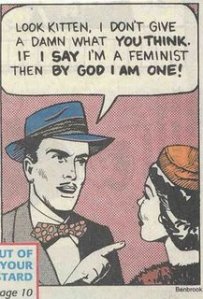
Reinforcing stereotypes

So last Sunday there was this protest in Paris by the traditional Catholics who oppose the possibility that homosexuals could have the right to marry.

These believers are among those who think that 1789 was the beginning of the end for France and that they are the ultimate worshippers of Jesus' bleeding heart.

Well, they're not exactly the people I feel spontaneously close to but if they want to protest so be it.

And then come less than ten topless girls wearing black veils similar to that of the nuns of yesteryear and spraying the protesters with their fire extinguishers filled with some kind of white smoke. The indication "sperm" is written on the fire extinguishers (see the pic).

Talk of a clever thing to do! What did the girls expect from such a counter protest but be brutalized and vilified? (one of them apparently lost a tooth). 

I fail to see how this sort of street action can be of any help to the feminist movement or the gay cause. For the majority of people it will be understood as another evidence that "feminists" are a bunch of hysterical banshees associated with queers.

What FEMEM does in Paris I don't know. None of the girls I've heard speak French and I have no idea of what they do in their spare time when they've finished parading half naked in the streets.

But yet I don't oppose their raison d'être and how they've deemed the most appropriate way to protest. I even suggest they march down the street where I live to protest the male chauvinist pig that lives here (me).

Go girls go!


mercredi 14 novembre 2012

lundi 5 novembre 2012

On the (relative) morality of the Hiroshima bombing


Ever since I learned of the Hiroshima and Nagasaki bombings I've always wondered why these acts of war were considered the epitome of barbarity and of the utmost inhumanity men are capable of.

Six months prior to the 6th and 9th of August 1945, there has been an aerial raid on Dresden which cost the lives of maybe 200.000 people who perished in an inferno of flames. Most of the same number of Japanese victims in Hiroshima and Nagasaki evaporated within seconds.

The raid over Dresden simply was an act of revenge and retaliation with no military targets and which didn't alter the course of the war nor significantly shortened it.

Before the bomb was dropped over the Japanese city of Hiroshima, an ultimatum was sent to the Empire of Japan which disregarded it and one bomb wasn't enough to make the military clique open its eyes, the generals and politicians accepted that another bomb be dropped and dozens of thousands other civilian casualties perish.

The A. bombings weren't acts of revenge or "punishment" over the Japanese population, they had the moral purpose to make the war come to an end asap and they fulfilled their mission within days.     

The only thing that makes anybody's death different is whether it is or not associated with pain. Is being burnt to death trapped in the back seat of a car after a crash on the motorway or with one's throat slit by some deranged thug a lesser plight that being suddenly atomised? 

It is the enormity of the damages that are caused with one single object that raises fright and terror but at the end of the day, since it is a matter of bringing chaos and destruction, it is just a question of scale.

Paradoxical as it may seem, what happened on August the 6th of 1945 was perhaps the less immoral act of the Second World War since it precisely put an end to said war, a result that the supposedly more "moral" traditional bombings of Tokyo with its 100.000 casualties failed to achieve.